
Arapahoe County Sex Offender Checks
The official starting point is the Colorado Sex Offender Registry, operated by the Colorado Bureau of Investigation. Search the public website for a name or location, then compare the returned name, aliases, date of birth, address, photo when available, registering offense, offense date, conviction date, and registration status. A similar name alone is not enough. The law enforcement agency serving the registrant's residence handles the local registration duty, so that agency is the verification channel for a local address or compliance question.
The CBI Sex Offender Registration Unit page documents the state unit's public and protected registry channels.
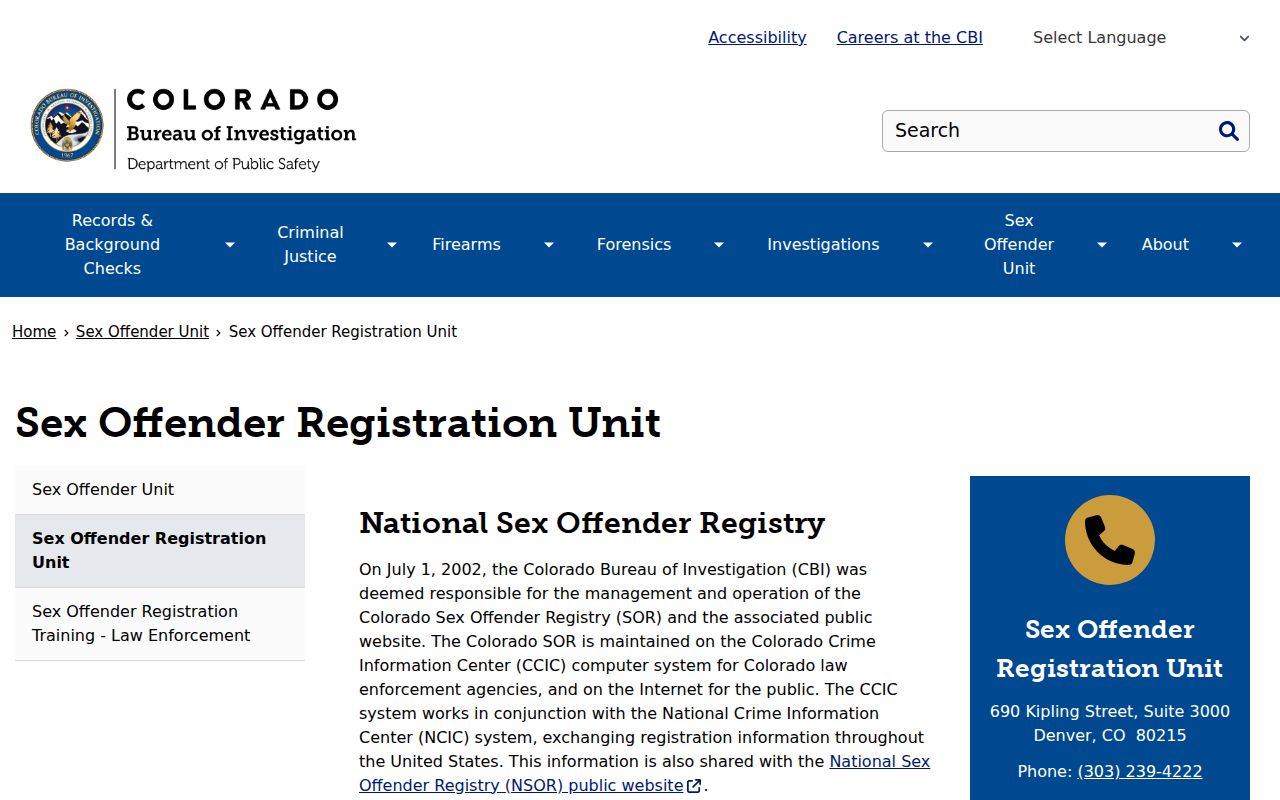
That official page is the source for forms, unit contacts, public-category limits, and the noncompliance reporting route used in an Arapahoe County registry inquiry.
Colorado's public website displays defined categories, not every person who has ever had a registration duty. That distinction matters in Arapahoe County, where Aurora, Centennial, Littleton, and unincorporated communities have different local law enforcement providers. CBI holds the statewide registry layer. Local agencies receive registrations and changes. The safest workflow is to use the state result for awareness, avoid assumptions from a blank screen, and refer suspected noncompliance to officials.
Arapahoe Registry Results Have Limits
Colorado's public web categories include sexually violent predators, adults with multiple sexual or violent felony offenses, adults failing to register for a felony sex offense, and adults convicted of a felony sex offense who are currently registered with a local agency. Misdemeanor-only sex-offense convictions and juvenile adjudications do not appear in this public view. Thus, no result only means the public interface returned no matching entry. It does not prove that the person never registered, had no misdemeanor duty, had no juvenile adjudication, or lacks an out-of-state record.
Recent address changes can also take time to move through connected systems. Use enough identifiers to separate people with similar names, and do not treat a location pin as a promise that someone is at that spot at a given moment. For broader adult area information, CBI offers a separate written list process. For a search crossing Colorado's border, the national portal adds other participating jurisdictions.
Colorado Sex Offender Registry Searches
CBI's registry is JavaScript-driven, and its live identity and location choices can change. Do not assume a radius or field that is not shown on the current form. The following sequence keeps an Arapahoe County lookup tied to the official interface and its stated limits.
- Open the CBI public registry and read its conditions and scope notice.
- Choose the identity or location route that the live form offers.
- Review possible matches and compare more than a name or map point.
- Open the profile, note its status, and contact the local agency if verification is needed.
| Field Label | Type | Required | Notes |
|---|---|---|---|
| Identity route | Search mode | Choose one route | Use the name fields displayed on the live form. |
| Location route | Search mode | Choose one route | Use the geography fields currently offered by CBI. |
| Match details | Result review | Yes | Compare aliases, birth date, address, and photo when available. |
| Profile status | Profile field | Yes | Read the current registration status and listed offense details. |
Arapahoe Adult Registry List Requests
When the narrow public categories are not enough, CBI's Adult Registered Sex Offender Request Form provides a different channel. The request is mail-only and costs $20. It cannot be sent by fax or email, although CBI provides a credit-card payment form. Since a September 2021 change, the resulting adult list includes people registering for adult felony and misdemeanor sex-offense convictions. It still excludes those whose duty stems only from a juvenile adjudication.
The list request should not be confused with the instant public search. It is useful for a broader adult area inquiry, while the web portal is faster for public profiles in the listed categories. Mail the form to the CBI Sex Offender Registration Unit at 690 Kipling Street, Suite 3000, Lakewood, CO 80215. Questions can go to 303-239-4222.
Registry Profiles: What They Show
A lawful public profile identifies the registration record without disclosing victim information. CBI verifies a limited core of fields. Readers should not infer that unlisted vehicle, tattoo, or physical details are available, because those fields were not confirmed in the official source review.
| Name & Aliases | The full registered name and reported aliases help distinguish similar identities. |
|---|---|
| Date of Birth | The profile may provide DOB as an identity-matching field. |
| Photograph | A photograph is shown where available; do not use appearance alone to identify someone. |
| Registered Address | One or more reported addresses may appear and should be verified through the local agency when necessary. |
| Offense Details | The registering offense, offense date, and conviction date describe the basis shown by CBI. |
| Registration Status | The listed status is the profile's current registry indicator, not a prediction of conduct. |
Arapahoe Searches Across State Lines
The U.S. Department of Justice's National Sex Offender Public Website, or NSOPW, searches public registry information from participating jurisdictions. It adds value when a person recently moved, an address sits near a state line, or the inquiry concerns more than Colorado. NSOPW does not replace CBI or the local registration agency. Each jurisdiction controls what it makes public, and the national result inherits those source limits.
The official NSOPW search interface shows the national layer used for participating state and territorial records.
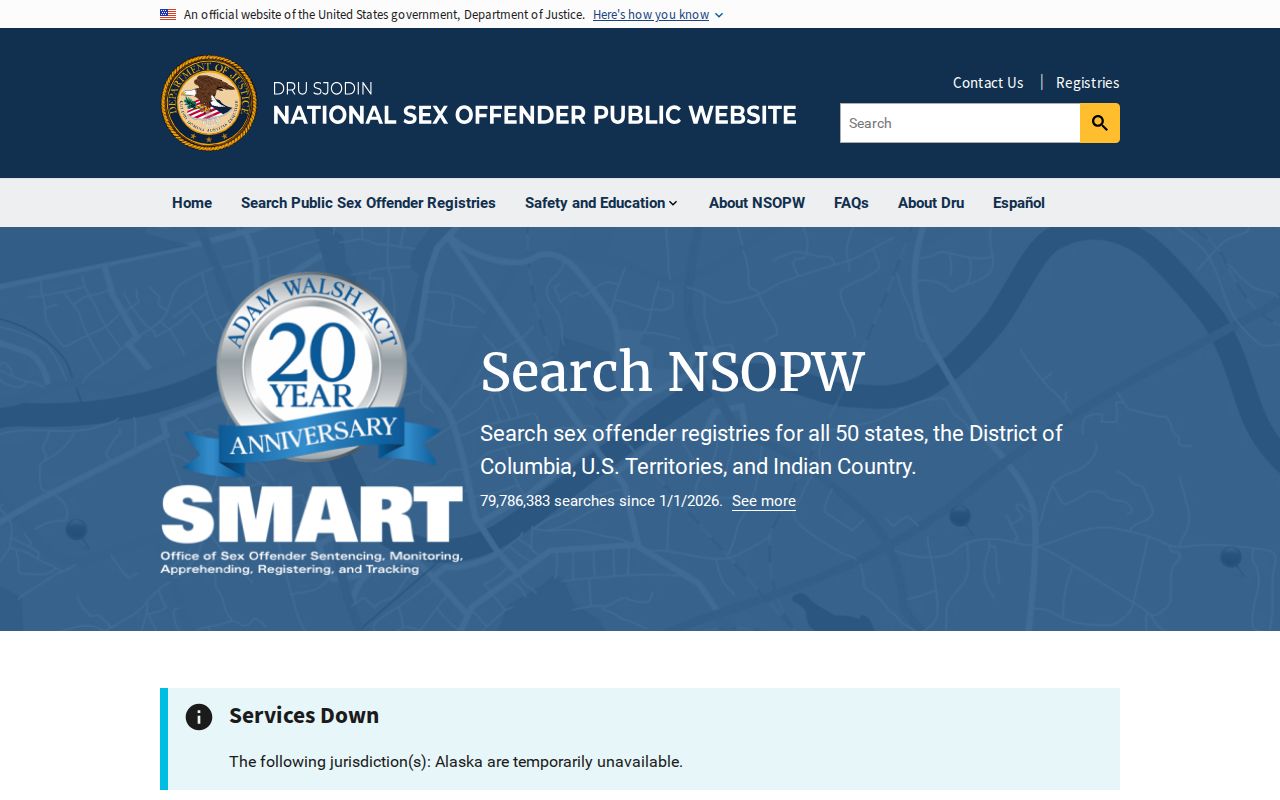
Its broader geography helps when an Arapahoe County search may involve a former address elsewhere, but source-state publication rules still apply.
Start with CBI for an Arapahoe County address because Colorado's definitions and profile status govern the local record. Use NSOPW as the cross-state layer. If either result suggests an address or status problem, report it rather than trying to investigate or confront the registrant.
Registration Levels and Duties in Colorado
Colorado does not simply publish the federal Tier I, Tier II, and Tier III labels. Public visibility turns on Colorado statutory offense categories, felony or misdemeanor status, repeat-offense categories, failure-to-register status, and sexually violent predator designation. Registration mechanics and frequency are governed by CRS 16-22-108, public release by CRS 16-22-110, and discontinuation by CRS 16-22-113.
The Judicial Branch maintains the official Seal My Case form hub for Colorado record-relief procedures.
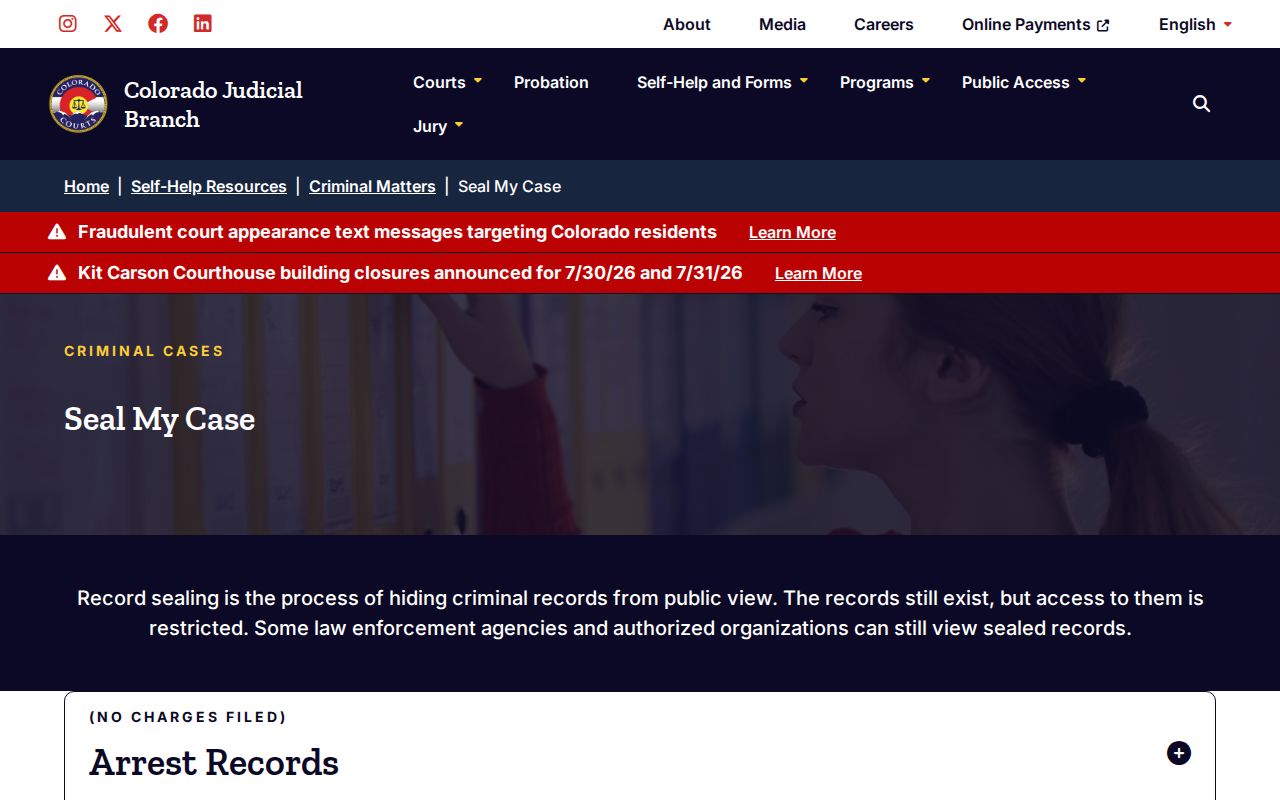
Sealing a criminal case and ending a sex offender registration duty are separate legal steps. A person relying on a discontinuation order must ensure it reaches both CBI and the local registration agency.
| Colorado category | Public visibility | Duration or review |
|---|---|---|
| Adult felony public-web category | Displayed when the person fits a category named by Colorado law | Depends on the offense and any lawful discontinuation process |
| Adult misdemeanor registration | Excluded from the public web view, but included in the mailed adult list | Depends on the governing offense and statute |
| Juvenile adjudication | Excluded from both the web view and adult list; named requests have safeguards | Ends at age 25 or seven years after initial registration, whichever is later, absent a later adult sex offense |
| Sexually violent predator | Included in the public web categories | Subject to Colorado's statutory registration and discontinuation rules |
Protected Arapahoe Juvenile Requests
CBI has a named-person process for juvenile registration information, but it is not an open list. A request must provide the full name. Date of birth, county of adjudication, case or docket number, and gender may be supplied to narrow the match. The requester must explain the need and affirm that the information will not be posted online, published, used for financial gain, or used to harass, intimidate, coerce, or cause serious emotional distress.
There is no search fee, and CBI may respond by mail or email. A lawful response may include registration status, names and aliases, birth date, addresses, a photograph if requested and readily available, and the registering offense and offense date. Victim information remains withheld. These controls show why juvenile information must never be inferred from the public website's silence.
Report Arapahoe Registry Noncompliance
Suspected noncompliance belongs with law enforcement. CBI maintains a reporting line at 303-239-5732, and the agency serving the registrant's address can check local registration records. Give officials the public profile details and the specific concern. Do not confront the person, circulate an accusation, or attempt independent surveillance.
CBI also warns about scam calls. Genuine CBI staff and local police do not call while threatening arrest and demanding gift cards or immediate payment. End the call, preserve any message or number, and contact the agency through an official published channel.
For a subject's separate federal identity-history review, the FBI directs users to its official electronic ordering portal.
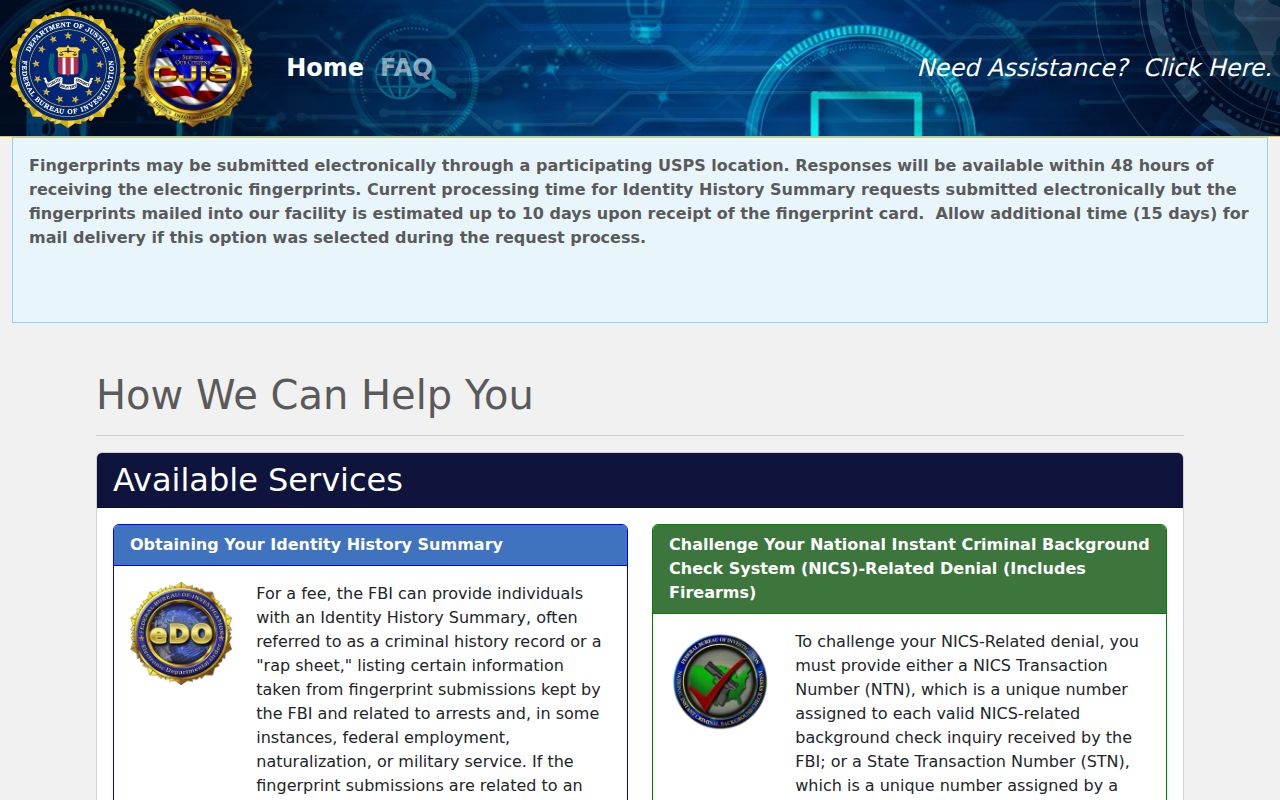
An FBI identity history is not a substitute for the public Colorado registry. It is a subject-only record channel that may help a person review their own federal history after a status issue is resolved.
Using Registry Information Lawfully
Registry information supports personal, family, and community safety. It is not a license to punish, exclude, threaten, or shame someone. Read the profile in context, remember that the listed offense and current status are distinct fields, and send possible violations to the local agency or CBI. CRS 16-22-110 controls public release, including protections for information obtained through restricted channels.
Misuse is a crime: CRS 18-9-310.5 makes protected-data misuse or a false statement used to obtain registry information an unclassified misdemeanor, punishable by up to $1,000 for each violation.